
How to Measure Your Breast Pump Flange Size (And Find the Most Common Fit)
Written by Jennifer Chivas, RN, BSN, IBCLC — Founder, Lactation Loop
If pumping feels painful, uncomfortable, or like you're working way too hard for every ounce, your flange size is almost always the first thing to look at. An ill-fitting flange is one of the most common — and most underdiagnosed — reasons moms struggle with pumping output, nipple pain, clogged ducts, and even a dip in milk supply.
Here's the thing: most pumps ship with a 24mm flange. But most women don't need a 24mm flange. In clinical practice, most IBCLCs find that the majority of breastfeeding moms actually need something smaller than the standard 24mm, and many don't find out until they've been struggling for weeks or months.
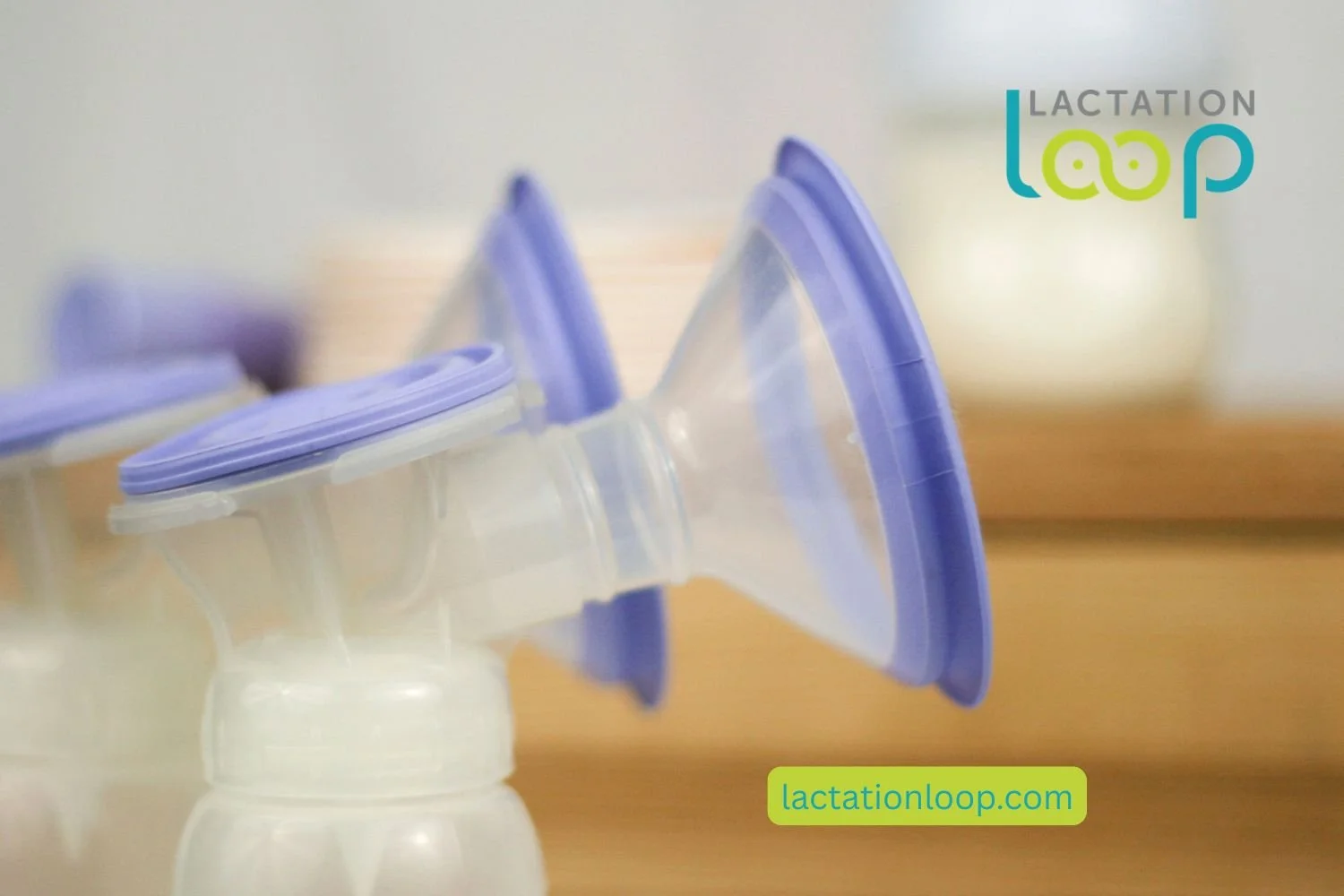
This guide walks you through how to measure correctly, what the three main flange options are (traditional hard plastic, panoramic/wide-angle, and silicone inserts), and how to know which one is right for you.
Measure Your Flange Size in 3 Steps
You don't need any special tools — just a soft measuring tape or a ruler.
Measure your nipple diameter (not areola). Right after pumping or nursing, when your nipple is slightly warmed up, measure straight across the base in millimeters.
Add 2–4mm to that number. Your flange should be slightly larger than your nipple diameter to allow room for movement during pumping — too tight causes pain, too loose reduces suction.
Match your number to a flange size. Most standard flanges run 24mm, 27mm, and 30mm, but many brands now offer smaller (19–21mm) and larger (32mm+) sizes too.
Still unsure, or output/pain isn't improving even with the "right" size? A quick virtual visit with an IBCLC can pinpoint your exact fit — book a flange fitting consult here.
What Is a Breast Pump Flange?
A breast pump flange — also called a breast shield — is the funnel-shaped piece that sits directly over your breast when you pump. It creates the seal that allows the pump to generate suction and draw milk out.
The most important measurement is the tunnel size: the circular opening your nipple is drawn into during pumping. When this is sized correctly, your nipple moves gently in and out of the tunnel with each pump cycle, with a small amount of space around it. When it's wrong — too small or too large — pumping can be painful, inefficient, and damaging to breast tissue over time.
Flange tunnel sizes typically range from 13mm to 36mm, though the most common sizes fall between 15mm and 28mm.
How to Measure for Flange Size
Always measure your nipple — not your areola. The nipple is the raised, cylindrical projection at the center. The areola is the darker ring around it. You want the nipple measurement only.
Step-by-Step:
Measure your nipple diameter at the tip — straight across the widest point in millimeters. Use a flexible measuring tape, a nipple ruler (many are available for free download and print), or common household items as a reference.
If you have two different size nipples — this is common! Order one of each size. Many kits come with a variety pack or an option to have 1–3 sizes. For example: if your left nipple measures 16mm but your right is 14mm, order one 14mm and one 16mm. Since flanges come in doubles, you'll simply have two sets — which means a little less washing!
Remeasure over time. Nipple size can change postpartum — typically getting smaller after engorgement — and throughout the pumping journey. If you end up with 2–3 different sizes, you may find yourself rotating between them over the course of six months.
Quick Household Measurement Reference:
AAA Battery = 11mm
AA Battery = 15mm
Dime = 18mm
Penny = 19mm
Nickel = 21mm
Quarter = 24mm
Note: These are starting estimates. The best confirmation of fit comes from watching your nipple during a pumping session — see the "Signs of the Right Fit" section below.
1. Traditional Flange (Hard Plastic, Standard Shape)
The traditional flange is the original and still the most widely available breast pump flange option. It's made from rigid plastic and has a straight funnel shape that leads directly into a cylindrical tunnel.
Most pump manufacturers ship with a traditional-style flange, typically in 24mm. Medela, Spectra, Ameda, Motif, Lansinoh, and nearly all major brands use this style as their standard offering, with additional sizes available separately.
Who It Works Best For
Moms who respond well to firm suction
Those with nipples that need structured guidance into the tunnel
Moms who need a size outside the typical range (traditional flanges are available in the widest variety of sizes, from 13mm to 36mm+)
Those troubleshooting or establishing a baseline fit before trying other options
Pros
Widely available in many sizes
Durable and easy to clean
Compatible with nearly all pumps
Best option for finding your baseline measurement
Cons
Rigid plastic can feel harsh on sensitive or sore nipple tissue
The straight funnel shape doesn't account for natural breast curvature
Many moms find standard 24mm sizes too large out of the box
Signs of a Good Fit with a Traditional Flange
Nipple moves gently in and out of the tunnel without touching the sides
A small amount of areola (2–3mm) is drawn in, but not more
No pain, pinching, or friction during pumping
Breast feels notably softer and lighter after each session
Output is consistent and comfortable
If you're experiencing nipple rubbing against the tunnel walls, your flange is too small. If large amounts of areola are being pulled in, your flange is too large.
2. Panoramic (Wide-Angle) Flange
Panoramic flanges — sometimes called wide-angle or open-angle flanges — are designed with a wider, more open funnel shape that better mirrors the natural contour of the breast. Instead of a tight, straight funnel, the pano design allows the breast tissue to sit more naturally against the flange surface.
Who It Works Best For
Moms with flatter or fuller breast tissue at the base (the breast sits more flush against the chest)
Those who find traditional flanges uncomfortable even with the correct tunnel size
Anyone whose breast tissue doesn't seat well in a traditional funnel shape
Pros
More anatomically shaped — often feels more comfortable
Better seal for many breast shapes
Can improve milk output for moms who weren't responding well to traditional flanges
The wider opening angle puts less pressure on surrounding breast tissue
Cons
May need additional pieces for conversion to properly fit certain pump models
May not improve output for all moms — benefit varies by anatomy
Can be more expensive than standard flanges due to additional pieces needed
IBCLCs often recommend starting with a traditional flange to establish your baseline size, then trying a panoramic option if you're still experiencing discomfort or feel the seal isn't quite right. The tunnel size should remain the same — it's the surrounding shape that changes.
3. Flange Inserts (Silicone Sizing Inserts)
Flange inserts — also called sizing inserts or silicone inserts — are soft silicone pieces that fit inside a standard hard plastic flange to reduce the tunnel size. They're one of the most practical and cost-effective solutions for moms whose correct nipple size is smaller than the flange their pump came with.
Because most pumps ship with a 24mm flange and most nipples measure well below 24mm, inserts have become increasingly popular. They're typically available in sizes ranging from 13mm to 21mm and are designed to fit inside a standard 24mm flange to bring it down to the correct size.
Who Inserts Work Best For
Moms who need a smaller tunnel size than their pump's standard flange provides
Most portable pumps require inserts for optimal flange fitting — they do not sell custom sizes beyond 21mm, 24mm, or 28mm
Anyone who wants to try smaller sizes without purchasing multiple hard plastic flanges
Pros
Cost-effective way to size down without buying new flanges
Compatible with most standard 24mm flanges from major pump brands (Eufy, Spectra, Medela, Motif, Momcozy, and more)
Can make a significant difference in comfort almost immediately
Easy to clean and replace
Cons
Only work with 24mm base flanges (not compatible with 27–28mm shields)
Silicone can sometimes reduce suction efficiency — use of an oil-based lubricant is recommended; coconut oil is common
Need to be replaced every 2–6 months depending on frequency of use, as the material degrades and can reduce suction integrity
Not a substitute for a properly sized hard flange — if you're doing a full sizing assessment, always start with hard plastic first
How to Use Flange Inserts
Determine your correct nipple measurement (see measuring section above)
Select the insert size closest to your measurement — inserts are available in 13, 15, 17, 19, and 21mm in most kits
Insert the silicone piece into your 24mm hard plastic flange — it should snap or seat securely inside
Attach to your pump as normal and pump for a short session to assess fit and comfort
If the nipple is rubbing the sides, try the next size up. If significant areola is being pulled in, try the next size down.
Important note: Inserts reduce the tunnel size but do not change the overall flange diameter or shape. If you're also struggling with the flange not seating correctly against your breast, you may need to consider both an insert and a panoramic-style flange, or work with an IBCLC for a full fit assessment.
Signs You Have the Right Flange Fit
Regardless of which flange type you're using, these are the signs that your fit is correct:
Nipple moves freely in the tunnel — in and out with each pump cycle — without touching the sides
A small area of areola (roughly 2–3mm) is pulled in
Pumping is comfortable — you feel suction but no pain, pinching, or burning
Your breast feels noticeably softer and emptier after each session
Output is consistent with your baby's feeding needs
Signs You May Need a Different Size
If the flange is too small:
Nipple rubs against the sides of the tunnel and is painful
Pain or friction during pumping
White or blanched color at the nipple tip after sessions
Output is lower than expected
If the flange is too large:
Large amounts of areola are being pulled into the tunnel, or the tip reaches the milk draining area and covers it, blocking milk flow
Areola appears red or irritated after pumping
Breast doesn't feel well-drained
Low output despite adequate pump settings
When to See an IBCLC for Flange Fitting
Flange sizing is not always straightforward. Nipple elasticity, breast shape, skin sensitivity, and pump mechanics all factor in. If you've tried adjusting your flange size and are still experiencing pain or low output, it's time to work with an IBCLC. If you're also nursing directly, a poor flange fit can sometimes show up as fussiness or frustration at the breast too — not just during pumping sessions.
Our board-certified IBCLCs at Lactation Loop offer flange fitting assessments as part of pumping consultations. We can:
Measure your nipple diameter accurately and account for elasticity (which can change your effective size)
Watch you pump and assess fit in real time
Identify whether a different flange shape, size, or type would work better
Rule out other pumping issues including suction settings, pump motor strength, and output concerns
Help you use your pump settings for optimal performance
Help you navigate insurance coverage for new flanges or pump supplies
Frequently Asked Questions
How do I know if my flange size is wrong? The clearest signs are nipple pain or friction during pumping, red or irritated tissue after sessions, large amounts of areola being pulled into the tunnel, or consistently low output despite pumping regularly. Any of these warrant a sizing check.
Can I use a flange insert with any pump? Most inserts are designed for 24mm hard plastic flanges and are compatible with the most popular pump brands including Eufy, Spectra, Medela, Motif, and Momcozy. Check compatibility before purchasing — inserts are not designed for 27–28mm flanges.
Do I need the same flange size on both sides? Not necessarily. Nipples often differ slightly in diameter, and many moms use different sizes on each side. Always measure both nipples independently.
How often should I replace my flanges or inserts? Hard plastic flanges can last the duration of your pumping journey if they're not cracked or warped. Silicone inserts should typically be replaced every 2–6 months depending on frequency of use, as the material degrades over time and can reduce suction efficiency.
My flange size seemed right at first but now it's uncomfortable. What happened? Nipple size can change over the postpartum period — especially in the early weeks when swelling and engorgement are common. If your fit has changed, remeasure and reassess. It's also worth checking if your flange or insert has worn out.
Can a wrong flange size cause mastitis or clogged ducts? Yes. A flange that's too small or too large can prevent complete breast emptying, which is one of the leading causes of clogged ducts and, if left untreated, mastitis. Correct flange fit is one of the most important factors in preventing these complications.
Get a Flange Fitting with a Lactation Loop IBCLC
Getting your flange size right can genuinely transform your pumping experience — from painful and frustrating to comfortable and effective. If you've been struggling and aren't sure where to start, a pumping consultation with one of our board-certified IBCLCs is the fastest way to get there.
Insurances we work with include Aetna, Cigna, United Healthcare (UHC), UMR, Meritain, Anthem, Wildflower, The Lactation Network, Curative, Tricare Select, BCBS of Texas, Blue Cross Blue Shield PPO, VA CCN, and some HMO plans. Check your specific plan here: lactationloop.com/insurance-information. Sliding scale service is available upon request.
Contact us before your first appointment and we'll help verify your benefits.
Book a visit: lactationloop.com/services — or text: 941-254-2502
Related reading:
How to Increase Milk Supply: What Actually Works (And What Doesn't) — lactationloop.com/blog/how-to-increase-milk-supply-what-actually-works-and-what-doesnt
Mastitis, Clogged Ducts & Engorgement: An IBCLC's Complete Guide — lactationloop.com/blog/mastitis-vs-engorgement-vs-clogged-duct
Breast Pumping Questions Answered — https://lactationloop.com/blog/the-complete-pumping-guide-for-new-moms-everything-your-ibclc-wants-you-to-know